Meta-Learning Made Simple: Study Faster With Feedback Loops
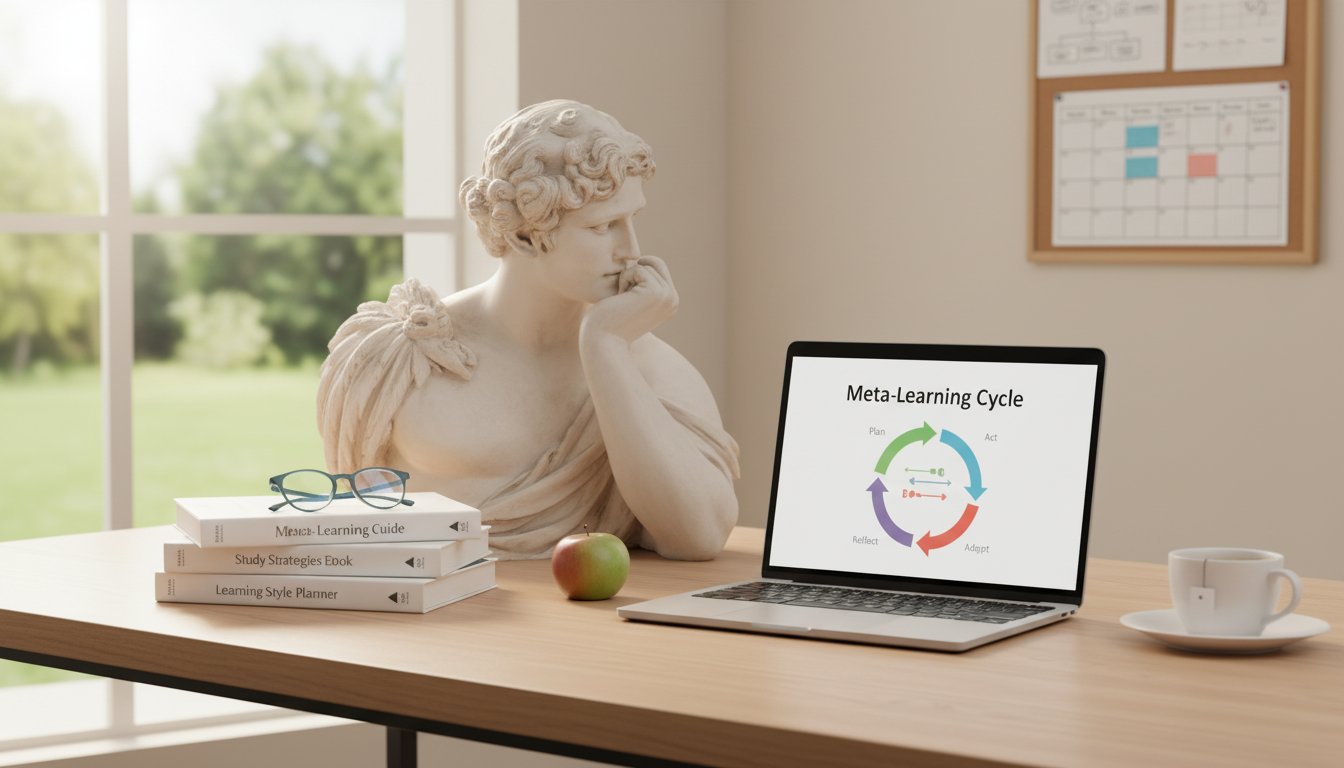
Learn to Learn: A Practical Meta-Learning Guide for Faster, Smarter Study
Learning gets easier when the process becomes clear: set a goal, choose the right strategy, practice with feedback, and adjust. A repeatable “learn how you learn” system helps whether the target is a class grade, a professional certification, or a personal skill project. The right toolkit makes it simple to plan, run short high-impact sessions, and refine what works—so each new topic starts with momentum instead of guesswork.
What “meta-learning” looks like in real life
Meta-learning is the habit of treating study like a system you can improve. Instead of spending more time by default, you focus on the inputs that create measurable progress.
- Define the outcome first (what “done” means): a target score, a skill demonstration, or a project deliverable you can show.
- Break the topic into sub-skills and prerequisites so you don’t get stuck re-reading without moving forward.
- Choose methods that produce feedback (practice questions, exercises, teaching-back, timed recall) rather than passive review.
- Create a tight loop: plan → practice → check results → revise the plan.
- Track what works across subjects so each new course begins with a proven starting template.
Research consistently supports the value of active retrieval and spaced practice for durable learning, compared with strategies that only feel productive in the moment. See: Roediger & Karpicke (2006), Cepeda et al. (2006), and Dunlosky et al. (2013).
What’s inside the digital learning toolkit
A flexible toolkit helps you set up a consistent workflow without reinventing your process every time the subject changes. The Learn to Learn: A Meta-Learning Guide (digital PDF toolkit) is designed to be reused across different learning projects.
- Digital Learning Guide PDF: a structured way to map goals, study blocks, and checkpoints.
- Study Strategies eBook: practical techniques for memory, comprehension, and exam readiness.
- Learning Style Planner: prompts that help identify preferences and environment factors (time of day, distractions, format) without relying on labels alone.
- Self-development worksheets: reflection pages to refine routines, motivation, and consistency.
- Designed for quick reuse: set it up once, then repeat the loop for each unit, chapter, or module.
How to use the guide in the first 60 minutes
The fastest way to feel a difference is to run a short cycle and capture feedback immediately. Here’s a practical hour-one setup that keeps the plan lightweight and action-oriented.
- Minute 1–10: pick one short-term goal (one chapter, one module, one skill) and set a measurable checkpoint.
- Minute 11–25: list sub-topics and select one active method (retrieval practice, problem sets, or summarizing from memory).
- Minute 26–40: run a short practice session and record what was missed or slow.
- Minute 41–55: adjust the plan (more spacing, different examples, smaller chunks, or more practice items).
- Minute 56–60: schedule the next session while the plan is fresh (spacing beats cramming).
If the goal is consistency, the scheduling step is the hidden engine: a decent plan used repeatedly beats a perfect plan used once.
Study strategies that tend to pay off
Not all study time is equal. These methods tend to create clearer signals about what you know—and what still needs work.
- Retrieval practice: regularly test memory by recalling without notes, then check and correct.
- Spaced repetition: revisit material over time to reduce forgetting and strengthen long-term retention.
- Interleaving: mix problem types or concepts to improve discrimination and flexible use.
- Elaboration: connect new ideas to prior knowledge using “why/how” questions and examples.
- Error log: track repeated mistakes to target the next session with precision.
Quick guide to matching methods to learning goals
| Learning goal | Best-fit practice | How to measure progress |
|---|---|---|
| Remember key terms and facts | Spaced recall + flashcards (with explanation prompts) | Fewer misses over longer intervals |
| Solve problems reliably | Mixed problem sets + timed practice | Higher accuracy and faster completion |
| Understand concepts deeply | Teach-back from memory + build examples/analogies | Clear explanation without notes |
| Prepare for exams | Full practice tests + review of wrong answers | Score trend upward; fewer repeat errors |
Planning that reduces burnout and increases follow-through
Burnout often comes from plans that are too big, too vague, or too dependent on motivation. A meta-learning approach makes the plan smaller and the feedback clearer.
Who this toolkit fits best
Product option: Digital download details
- Learn to Learn: A Meta-Learning Guide | Digital Learning Guide PDF, Study Strategies eBook, Learning Style Planner, Educational Self-Development Toolkit
- Format: digital PDF/eBook toolkit designed for repeated use across topics
- Best used with: a simple weekly schedule and a short daily practice block
- Works well alongside: practice questions, course modules, and skill-based curricula
More in-stock digital guides you may like
- How to Escape a Car Loan You Can’t Afford – Step-by-Step Ebook Guide on How to Get Out of a Car Loan You Can’t Afford, Fix Your Finances & Protect Your Credit
- 10 Loving Ways to Comfort Your Child When They Miss a Parent | Gentle Parenting Checklist | What to Do When Child Misses a Parent | Printable Digital Download
- AI Insights for a Healthier Cat: Ultimate eBook Guide for Cat Health Monitoring with AI Tools and Techniques
FAQ
Does a learning style planner mean sticking to one “learning style”?
No. A planner like this is most useful for spotting preferences and conditions (environment, timing, formats) while still choosing strategies based on the task and using results to guide what to do next.
How quickly can study results improve with a structured system?
Many people notice better consistency within 1–2 weeks when sessions are short and scheduled. Measurable recall and test performance typically improve over multiple spaced cycles, depending on practice quality and frequency.
What’s the simplest routine to start with if time is limited?
Use a tight three-step loop: 20 minutes of active recall or problem practice, 5 minutes to check/correct, and 5 minutes to plan and schedule the next session.















Leave a comment