Daily Calm at Home Checklist: Mindfulness in Minutes
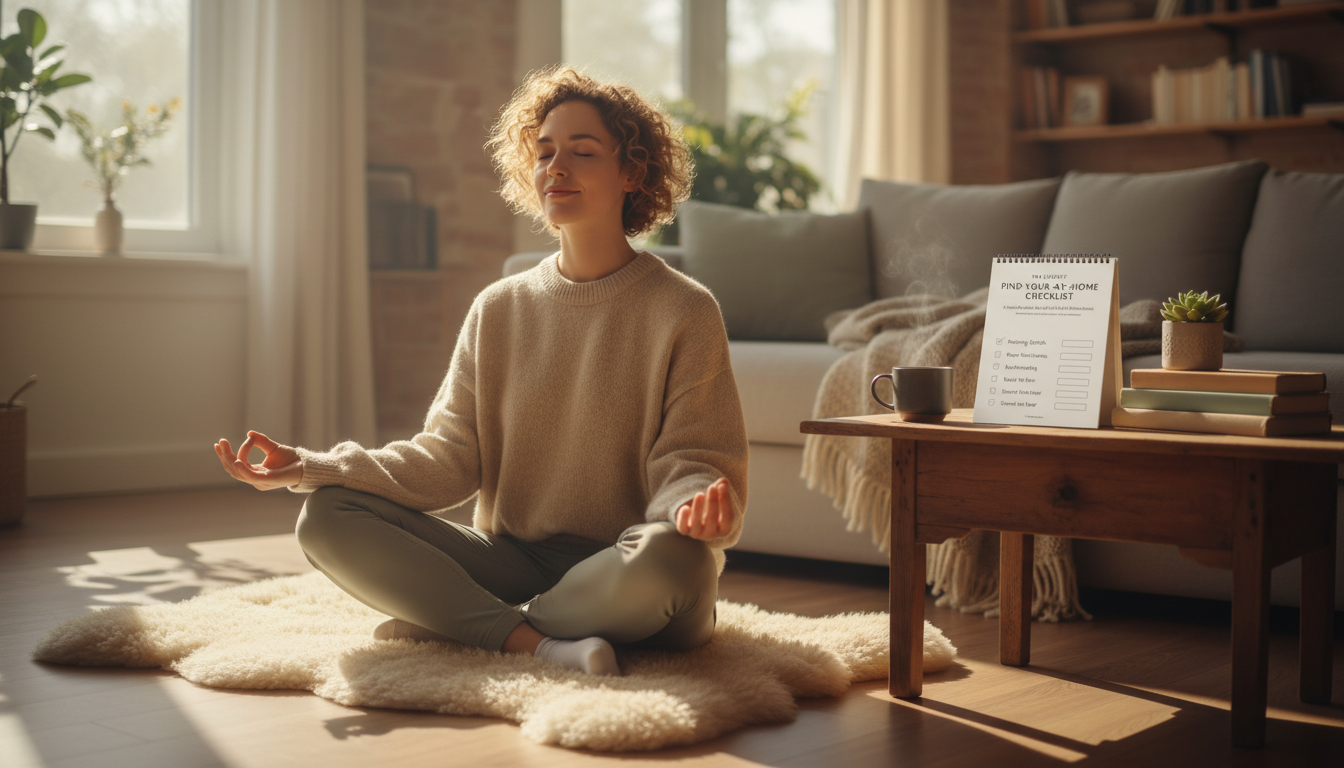
Find Your Calm at Home: A Daily Checklist for Peace and Mindfulness
A calmer home life rarely comes from one big change—it’s built through small, repeatable actions that settle the nervous system, reduce friction, and make it easier to return to the present. A checklist approach turns mindfulness into practical steps that fit real schedules, shifting moods, and low-energy days. The goal isn’t to “never feel stressed,” but to shorten the spiral and make recovery feel more natural.
What “calm at home” looks like (and what it doesn’t)
Calm isn’t a constant mood, and it doesn’t require a perfectly quiet house. Calm is the ability to return to steadiness after life bumps you around—noise, mess, deadlines, parenting moments, and hard conversations included.
- Calm is recoverable: You still get irritated or overwhelmed, but you notice it sooner and come back faster.
- Mindfulness can be micro-moments: one breath before replying, one minute listening to ambient sounds, one intentional sip of water.
- A helpful goal: fewer spirals, gentler self-talk, and more “ease pockets” throughout the day.
- Track progress differently: measure consistency and recovery time, not whether you “stayed zen” all day.
For a research-backed overview of how mindfulness can support stress management, see the National Center for Complementary and Integrative Health (NCCIH) and the American Psychological Association’s mindfulness resources (APA).
Set up a “calm-ready” environment in 10 minutes
Environment won’t solve everything, but it can remove tiny stressors that drain patience. Aim for “calm-ready,” not spotless.
- Choose one anchor spot: a chair, a corner of the couch, or your bedside—one place your brain associates with pausing and breathing.
- Reduce one friction point: clear a single surface, place a laundry basket where clutter lands, or create one charging station.
- Adjust one sensory input: softer lighting, a window cracked for fresh air, or low-volume background sound.
- Create a cue: a sticky note that says “Breathe,” a timer, or a printed checklist on the fridge.
Quick home tweaks and what they support
| Tweak | Time | What it helps |
|---|---|---|
| Clear one countertop | 3–5 min | Less visual overload and decision fatigue |
| Set a “landing zone” tray for keys/wallet | 2 min | Fewer daily mini-stress spikes |
| Dim lights or switch to warm light in the evening | 1 min | Easier wind-down and sleep readiness |
| Open a window or step outside briefly | 2–5 min | A reset for attention and mood |
| Put a glass of water where you’ll see it | 30 sec | Supports regulation and reduces irritability |
The daily calm checklist (morning, midday, evening)
Keep each block short on purpose. Short routines are easier to repeat, and repetition is what builds the “return to steady” skill.
Morning (2–7 minutes)
- Sit up tall and take 5 slow breaths.
- Name one intention: “steady,” “patient,” or “focused.”
- Do a quick body scan from head to toes, loosening any area that feels braced.
Midday (1–5 minutes)
- Pause before the next task (even if it’s just a 10-second pause).
- Relax jaw and shoulders.
- Try a one-minute notice practice: 3 things you can see, 2 you can hear, 1 you can feel.
Evening (5–10 minutes)
- Reduce stimulation: lower lights, cut screen brightness, or put your phone in another room briefly.
- Tidy one small area (one surface, one basket, one “clutter corner”).
- Do a gentle stretch for neck/shoulders/hips.
- Write down one worry plus one next step for tomorrow so your brain can stop looping.
If time is tight: do “one breath + one choice” (one slow exhale, then choose the next smallest helpful action).
When stress spikes: a 90-second reset plan
When stress surges, the body often needs to settle before the mind can problem-solve. This sequence keeps it simple and repeatable.
- Name the moment: silently label it (“stress,” “overwhelm,” “frustration”) to create a small gap before reacting.
- Regulate first: lengthen the exhale—inhale 4, exhale 6—for 6–8 cycles.
- Release tension: unclench tongue, soften eyes, drop shoulders, loosen hands.
- Re-orient: look around and name 5 neutral objects (lamp, mug, door, pillow, plant) to signal safety to the brain.
- Choose a next step: water, a quick walk to the mailbox, a short message asking for help, or a 5-minute timer to start the task.
For additional practical stress-coping ideas, the CDC’s guidance is a solid reference (CDC: Coping with Stress).
Mindful routines that stick (even on low-motivation days)
Consistency is easier when the habit is small, attached to something you already do, and visible enough that you don’t have to remember it.
Bring others into the calm without forcing it
If your home calm is often disrupted by separation stress or big feelings, keep a gentle support sheet handy like 10 Loving Ways to Comfort Your Child When They Miss a Parent.
A printable guide to keep the routine effortless
For a ready-to-use option, The Ultimate Find-Your-Calm-At-Home Checklist – A Simple Guide to Daily Peace and Mindfulness provides a simple structure you can follow without overthinking.
FAQ
How long does it take for a daily mindfulness routine to feel easier?
For many people, it starts to feel more automatic in about 1–3 weeks of consistent practice. Keep the routine small (30–60 seconds counts) so you can repeat it daily without negotiating with yourself.
What if meditation makes the mind feel louder or more anxious?
That’s common at first—silence can make thoughts more noticeable. Try shorter practices, keep your eyes open, use grounding (noticing what you see/hear/feel), and focus on a longer exhale; if anxiety feels persistent or intense, consider professional support.
What’s the simplest calm habit to do when there’s no time?
Do one slow exhale while relaxing your jaw and dropping your shoulders, then choose the next smallest helpful action. It takes under a minute and can prevent a bigger stress spiral.
















Leave a comment