Small Closet Organization That Stays Clear: Declutter + Zone
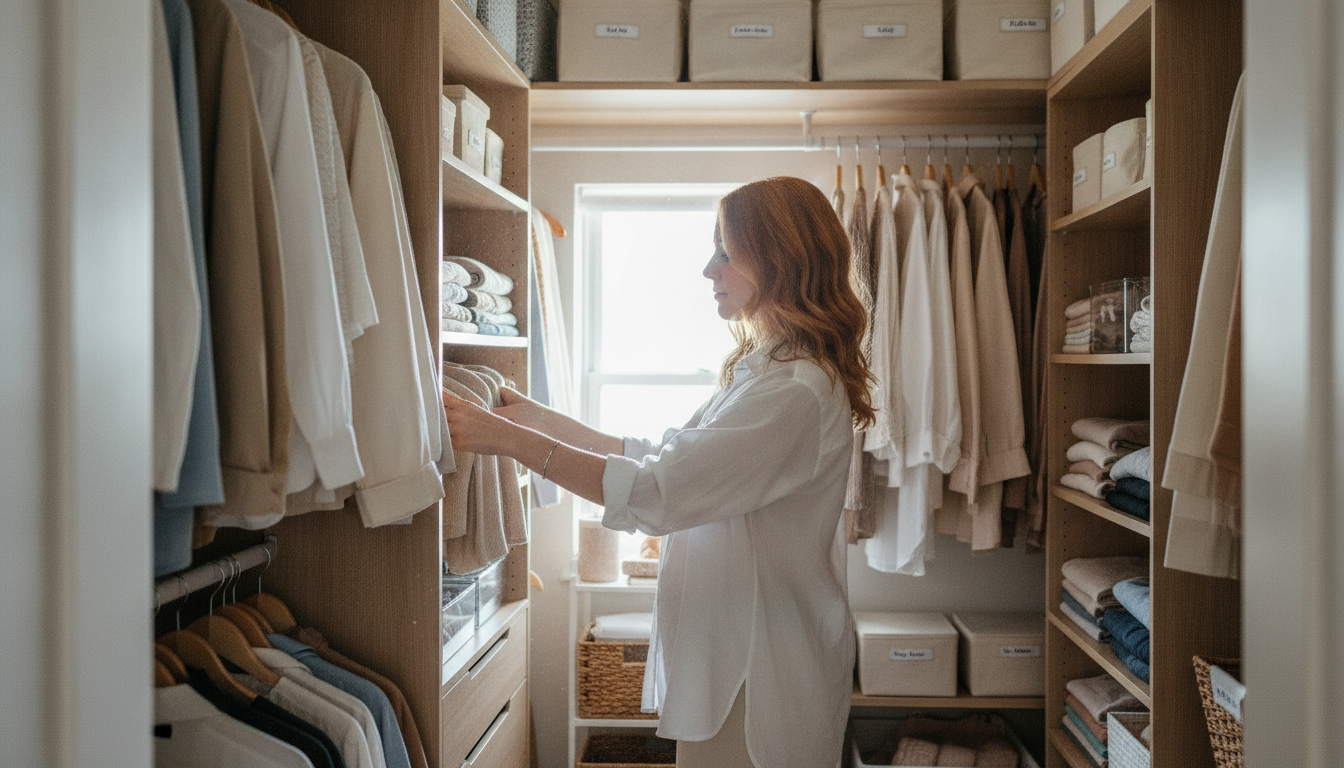
Closet Clarity for Small Spaces: Simple Decluttering and Smart Storage That Stays Organized
Small closets get chaotic fast: limited hanging room, awkward corners, and “no place” for accessories. A clear plan makes a bigger difference than buying more bins. Use the steps below to edit what you own, set up zones that match daily routines, and choose storage that fits your space so the closet is easy to maintain week after week.
Start with a 30-minute reset that reveals the real problem
A small-space closet reset works best when it stays contained. Instead of pulling everything out at once, focus on one zone so the closet never turns into a room-sized pile you can’t finish.
- Empty only one zone at a time (floor, shelf, or hanging area). Put cleared items on the bed or in a laundry basket so you can move quickly.
- Do an “obvious yes/obvious no” pass immediately. Damaged items, duplicates, and never-worn pieces go into a decision pile right away—no debating yet.
- Wipe shelves and vacuum the closet floor before anything returns. A clean surface makes the reset feel complete and reduces the “why bother?” feeling later.
- Measure before you shop: closet width, hanging height, and shelf depth. Storage works in small spaces when it fits the dimensions, not when it looks cute online.
Professional organizing standards and resources can be helpful if you want a deeper framework; the National Association of Productivity & Organizing Professionals (NAPO) is a solid place to start.
Declutter with rules that reduce decision fatigue
If decision-making is what slows you down, use a repeatable filter. The goal isn’t to own “less” in an abstract way—it’s to keep what earns its space in your current life.
- Use the fit/function/frequency filter: does it fit now, does it serve current life, and is it worn regularly?
- Create three containers: Donate/Sell, Repair/Tailor, and Relocate (items that belong elsewhere like paperwork, tools, or random cords).
- Set a capsule limit per category based on your laundry rhythm and lifestyle (for example, 7–10 workout tops if you work out often and do laundry weekly).
- Keep sentimental items out of the closet unless they’re actively worn. Store them separately so everyday clothing can stay accessible.
Fast decision guide for common closet categories
| Category | Keep when… | Let go when… | Best small-space home |
|---|---|---|---|
| Everyday tops | Worn weekly and fits comfortably | Itches, pulls, or never chosen | Slim hangers or folded in one drawer section |
| Formalwear | Needed in next 6–12 months | No events planned and it doesn’t fit | Garment bag on a short hanging section |
| Shoes | Comfortable and used in season | Painful, damaged, or duplicates | Vertical rack or under-shelf shoe slots |
| Bags | Used regularly and holds shape | Straps peeling or never used | Hooks, shelf dividers, or dust bags up high |
| Accessories | Pairs/sets complete and worn often | Singles, tangled, or hard to find | Small bins, drawer organizers, or hanging pockets |
Keeping your closet from turning into a stress hotspot is more than aesthetics. For practical, research-backed stress resources, see the American Psychological Association (APA).
Build a “zones first” layout for maximum space
When a closet is small, organization has to match how you actually get dressed. Zoning creates default “homes” so items don’t drift onto the floor or into mystery stacks.
- Assign zones based on your routine: Daily Wear, Work/School, Activewear, Occasion, Shoes, and Accessories.
- Put Daily Wear at eye level. Store off-season and occasion items higher or farther back so prime space stays functional.
- Use the closet door for flat or lightweight items (belts, scarves, hats) to free shelf and rod space.
- Keep a small “return box” inside the closet for items that belong elsewhere; empty it once a week so re-cluttering stops at the source.
Small environmental shifts can noticeably change how a space feels day to day; research groups that study home life, like UCLA’s Center on Everyday Lives of Families (CELF), highlight how household environments shape routines.
Smart storage upgrades that don’t require a remodel
The best upgrades are the ones that “lock in” your zones and make it easier to put things back than to drop them on a chair.
Helpful digital tools (in stock)
- Closet Clarity: Maximize Small Spaces – Smart Small Closet Organization Guide (Digital Download) ($7.99)
- 10 Loving Ways to Comfort Your Child When They Miss a Parent (Printable Digital Download) ($3.99)
A simple weekly routine that keeps the closet clear
Digital guide option for a step-by-step plan
FAQ
What is the easiest way to organize a small closet without buying new organizers?
Start by editing and zoning first: remove duplicates, group by category, put daily-wear at eye level, and move off-season items up high. Use what you already have (shoeboxes as dividers, existing bins, consistent folding) and space hangers evenly so each category has a clear boundary.
How do you decide what to keep when your closet is overflowing?
Use fit/function/frequency, then set a realistic cap per category based on how often you do laundry. If something isn’t chosen within 30 days during its season, place it in a donation bag so it stops taking up decision-making space.
How can shoes be stored in a small closet without taking up the floor?
Go vertical: use over-the-door pockets for flats, a narrow shoe rack, or under-shelf shoe slots to reclaim floor space. Keep a curated in-season set accessible and store off-season pairs higher up or elsewhere.













Leave a comment