How to Reset After Messing Up: Stabilize, Reflect, Rebuild
A messy moment, a bad decision, or a painful mistake can leave the mind stuck in replay and the body flooded with stress. A reset is not about pretending nothing happened—it’s about stabilizing, learning, repairing what can be repaired, and taking the next right step with more clarity and self-respect.
When “messing up” feels bigger than the moment
After a setback, the aftershocks can look surprisingly physical and behavioral: rumination that won’t shut off, shame spirals, sleep disruption, avoidance, irritability, and pulling away from people. That reaction isn’t a character flaw; it’s often the nervous system trying to regain traction.
The brain tends to loop because uncertainty reads like threat. When something feels unresolved—What did they think? What did I cost myself? Can I fix it?—your mind keeps scanning for a “solve,” and it can’t relax until it senses control again. Stress can also show up in the body in very real ways (tension, headaches, stomach issues), which is why it helps to understand how stress affects the body and attention. The American Psychological Association explains common stress effects clearly at https://www.apa.org/topics/stress/body.
One key distinction speeds recovery: guilt vs. shame. Guilt focuses on actions (“I did something harmful or unwise”). Shame labels the self (“I am harmful or unwise”). Guilt can motivate repair; shame often blocks it by convincing you that change is pointless.
Signs a reset is needed now include difficulty concentrating, emotional numbness, self-sabotage, or repeating the same mental replay even when you’re trying to move on. When those signs appear, prioritizing stabilization first is not avoidance—it’s strategy.
A 3-phase emotional reset: stabilize, reflect, rebuild
Think of recovery in three phases. Each phase has a different job, and mixing them up (like trying to “figure it all out” while panicking) usually increases distress.
Phase 1 — Stabilize (today)
Lower intensity before you try to solve the problem. Simple regulation tools can shift your body out of emergency mode: slow breathing, light movement, hydration, and a sleep routine that’s consistent even if sleep isn’t perfect. If you want a structured option, the National Institutes of Health summarizes relaxation approaches here: https://www.nccih.nih.gov/health/relaxation-techniques-for-health.
Phase 2 — Reflect (next 1–3 days)
Turn the event into information rather than identity. Reflection is not a trial where you prosecute yourself; it’s a debrief where you collect data: triggers, needs, blind spots, and what support would have helped.
Phase 3 — Rebuild (next 1–4 weeks)
Rebuild with small, repeatable commitments: one repair action, one boundary or skill, and a way to track progress. Consider a “minimum effective step” approach—one doable action that reduces chaos and increases safety. Momentum comes from consistency, not intensity.
| Time window | Primary goal | Simple actions | What to avoid |
|---|---|---|---|
| Next 60 minutes | Stop the spiral | Slow breathing (4–6 breaths/min), drink water, short walk, write 3 facts about what happened | Re-reading texts/emails, doom-scrolling, making big decisions |
| Next 24 hours | Regain stability | Eat a real meal, consistent bedtime, 10-minute tidy, tell one trusted person the basics | Self-punishment, isolation, rehearsing every detail |
| Next 3 days | Make sense of it | Journaling prompts, identify triggers, choose one repair step, schedule a check-in | All-or-nothing promises, overexplaining, revenge or avoidance |
| Next 2–4 weeks | Build a new pattern | Practice a replacement habit, boundaries, therapy/coaching if needed, track progress weekly | Waiting to “feel ready” before acting |
Self-reflection that doesn’t turn into self-attack
Productive reflection stays specific. Start with facts: what happened, what was said or done, and what the actual outcome was. Facts reduce the mind’s tendency to fill gaps with worst-case stories.
Repair and accountability without losing dignity
Building resilience after the reset: how to bounce back for real
Strengthen stabilizers: sleep, movement, nutrition, social support, and reduced substance coping. These aren’t “nice-to-haves”; they’re your recovery infrastructure. Harvard Health discusses resilience training and mental health here: https://www.health.harvard.edu/mind-and-mood/resilience-training-can-improve-mental-health.
A structured workbook-style option for guided recovery
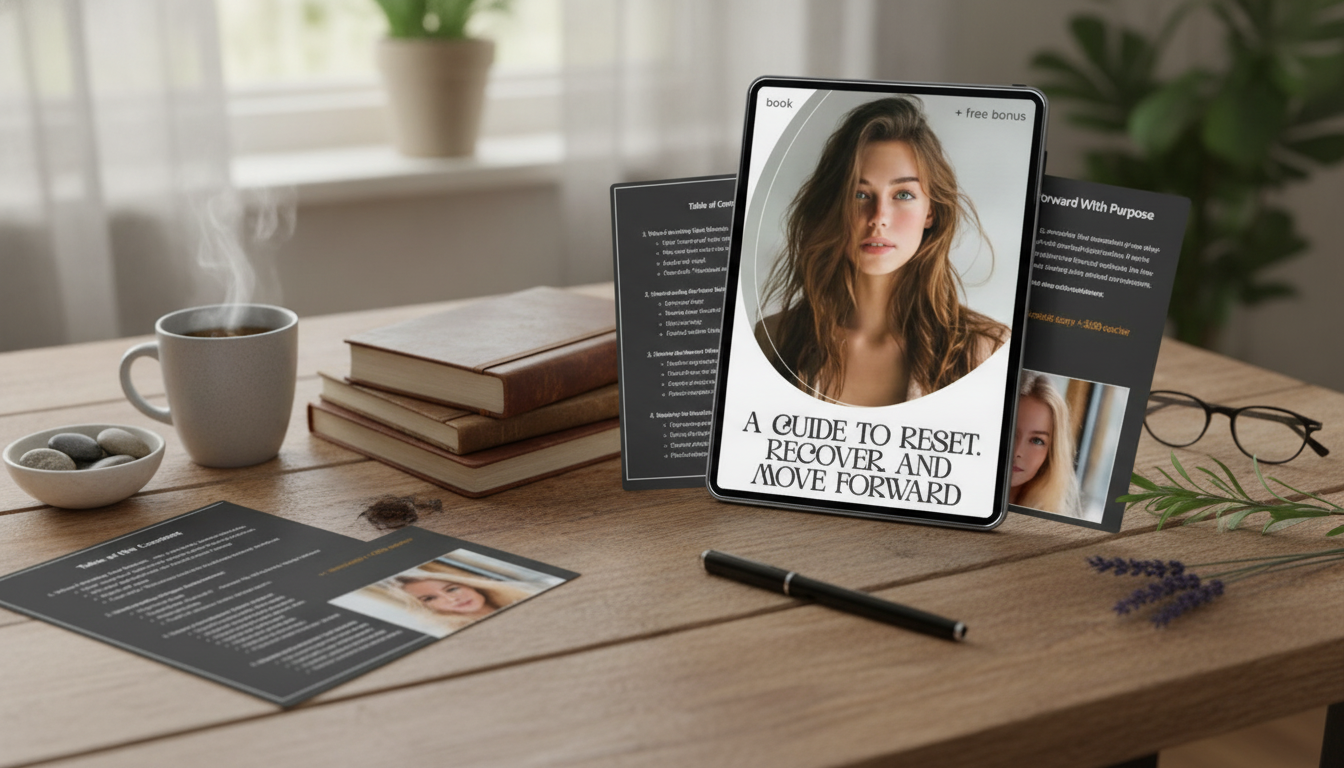
For a structured, workbook-style approach, consider A Guide to Reset, Recover, and Move Forward (ebook download). Short sessions (10–20 minutes) tend to work best for consistency without overwhelm.
If your setback also involves a practical life stressor, these guided downloads can support adjacent areas while you rebuild momentum: How to Escape a Car Loan You Can’t Afford – Step-by-Step Ebook Guide and 10 Loving Ways to Comfort Your Child When They Miss a Parent.
FAQ
How long does it take to recover emotionally after making a mistake?
Many people feel noticeable relief within days once sleep, hydration, and nervous-system regulation improve, but full emotional recovery often takes a few weeks as you repair and rebuild. Signs of progress include less rumination, better sleep, and clearer next steps that feel doable.
What if shame keeps coming back even after apologizing?
Repairing harm and forgiving yourself are related but different processes: an apology addresses impact, while self-forgiveness is built through consistent evidence of change. If shame remains intense, repetitive, or disabling, working with a therapist can help break the loop and address deeper beliefs driving it.
What are simple journaling prompts to move forward after messing up?
Try: “What are the plain facts of what happened?” “What was I needing in that moment?” “What was the trigger chain (situation → thoughts → feelings → actions)?” “What part is mine to own without global self-labels?” “What is one repair step I can take?” “What safeguard will reduce the chances of repeating this?” “What value-based action would the version of me I respect take next?”














Leave a comment