KonMari Daily Reset: A 10-Minute Checklist That Sticks
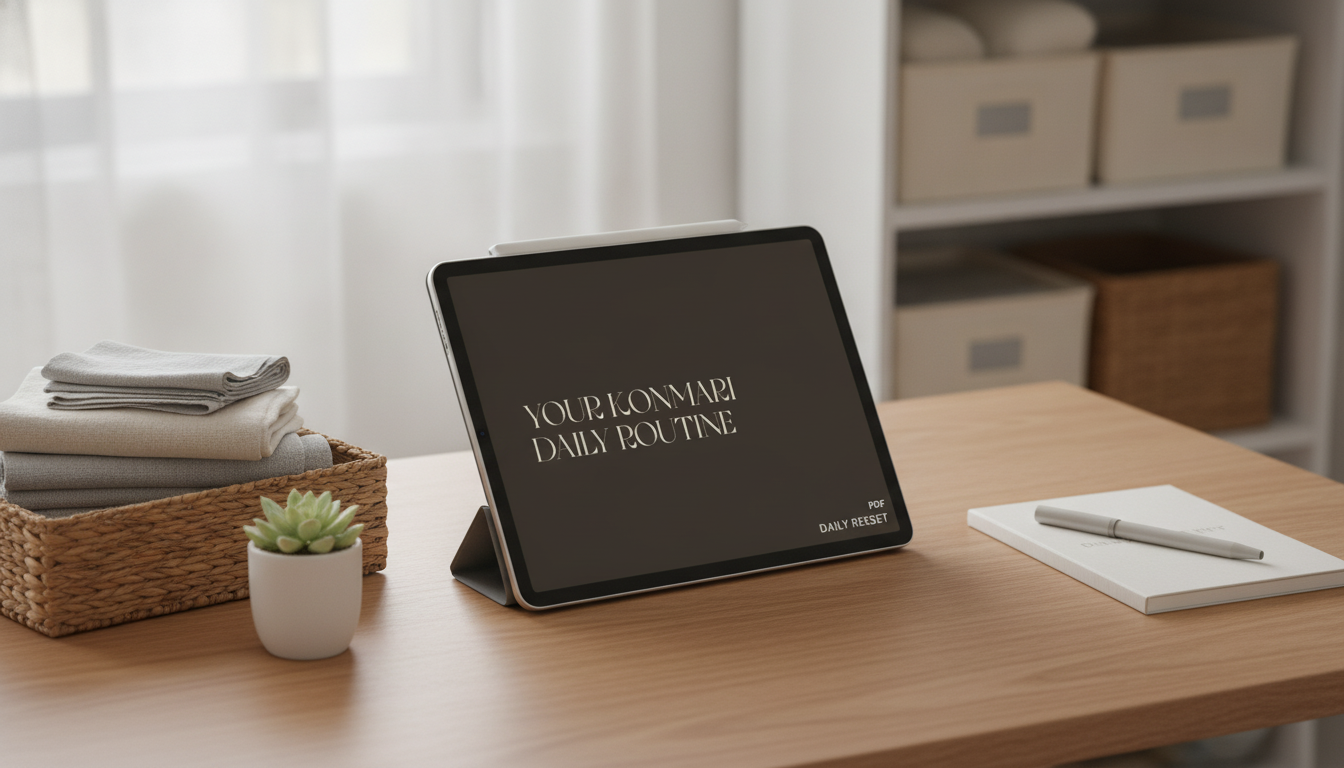
A Simple KonMari Daily Routine Checklist for Mindful Tidying and Joyful Living
A full KonMari festival creates a big reset, but daily life needs a lighter rhythm to keep spaces calm and belongings easy to find. A daily routine checklist turns “tidying” into a small set of repeatable actions that protect the joy sparked during decluttering—without spending hours each day. The goal is a home that resets quickly, supports your habits, and feels good to live in. For more guidance, see Marie Kondo and the KonMari Method: The Ultimate Guide.
What “daily KonMari” means (and what it doesn’t)
Daily KonMari is maintenance: returning items to their homes, honoring what you keep, and preventing pileups before they become stressful. Think of it as “closing the loops” you open while living—shoes worn, dishes used, mail received, blankets unfolded. For further reading, see KonMari pdf Checklist and Marie Kondo Method Start Guide ….
It is not re-decluttering categories every day. Categories (clothes, books, papers, komono, sentimental) are for the main tidying event. Daily routines simply protect the progress you already earned.
The focus stays on joy: keep only what serves you, then make it easy to put back. When returning something feels annoying or complicated, that’s usually a sign its “home” needs to be adjusted—not that you’re failing.
The best daily routine is short, consistent, and tied to moments that already happen: the start of the morning, after meals, and the final minutes before bed.
Set up success: homes for items + a “reset path”
Daily tidying is easiest when your home does more of the work for you.
Give frequently used items a clear home
Place items where they’re actually used: keys near the door, skincare near the sink, chargers in one spot, scissors where packages are opened. If you have to cross the house to put something away, clutter will “pause” on the nearest surface.
Create one temporary landing zone
Choose a small basket or tray as the only approved “I’ll deal with this later” spot. Throughout the day, drop stray items there instead of starting multiple piles. During your evening reset, empty it completely—no exceptions.
Use simple grouping and vertical storage
When storage is visible and upright, you spend fewer seconds deciding where things go. Group by function (morning routine, coffee routine, work routine) so you can reset quickly.
Reduce friction by trimming duplicates
If you own six water bottles but use two, the extra four become background clutter. Keep one or two favorites and set the rest aside for donation during your next review.
The daily checklist: morning, midday, and evening
Use these as “bookends” for your day. The goal isn’t perfection—it’s a fast return to baseline.
Morning (2–5 minutes)
Midday (1–3 minutes)
Evening (5–10 minutes)
Add one optional “micro-category touch”
Daily KonMari Reset Checklist (pick a short version or full version)
| Moment | Short reset (1–3 min) | Full reset (5–10 min) | Why it matters |
|---|---|---|---|
| Morning | Make bed; put away 5 items | Bathroom counter reset; start laundry if needed | Starts the day with visible calm and fewer decisions |
| After meals | Dishes to sink/dishwasher; wipe one surface | Clear counters; quick sweep in high-traffic spots | Stops the kitchen from becoming the day’s clutter hub |
| Late afternoon | Empty landing zone into proper homes | Sort mail; recycle packaging immediately | Prevents “mystery piles” and keeps entryway functional |
| Evening | Living room reset; plug in devices | Pack bag; set out outfit; 10-item floor pickup | Creates a smoother morning and reinforces item homes |
Weekly rhythm that supports the daily routine (without overdoing it)
Make it stick: cues, time limits, and joy checks
Anchor each reset to an existing cue: the kettle boiling, brushing teeth, or starting a favorite playlist. Habit researchers often emphasize cues and repetition; keeping the action tiny helps it survive busy weeks (see habit strategy ideas from James Clear).
Do a quick joy check when something repeatedly becomes clutter. It may not have a real home, the home may be too far away, or it may not belong in your life anymore—an idea aligned with the core KonMari philosophy on the KonMari Official Website.
Using a digital checklist for mindful tidying
If you like an always-ready, phone-friendly version, consider Your KonMari Daily Routine Checklist (digital download), designed for quick resets and optional add-ons when you have more energy.
Checklists can also be useful beyond tidying—any area that benefits from calm, repeatable steps. If your home life includes emotional transitions, a gentle routine resource like 10 Loving Ways to Comfort Your Child When They Miss a Parent (checklist) can pair well with a simplified household rhythm.
And when “clutter” shows up as financial stress rather than physical stuff, a structured plan can help create the same sense of relief and clarity: How to Escape a Car Loan You Can’t Afford (step-by-step ebook) offers a focused reset process—because peace of mind is part of joyful living, too.
For deeper context on the KonMari method itself, Marie Kondo’s book The Life-Changing Magic of Tidying Up is a helpful companion to daily maintenance habits.
FAQ
How long should a daily reset take?
A realistic total is about 5–15 minutes per day, split across morning, midday, and evening. On busy days, use a minimum viable reset: empty the landing zone and do a quick kitchen close-down.
Do daily routines replace the full KonMari tidying event?
No—daily routines maintain results, while the full tidying event is where category-based decisions and major decluttering happen. The daily checklist simply helps your home stay aligned with what you decided to keep.
What if other people in the home don’t follow the routine?
Start with shared zones and simple rules: return items to their homes and use one visible landing tray. Labels can help, but focusing on keeping your personal areas consistent often creates the clearest momentum.
















Leave a comment