Insomnia Wind-Down Checklist: 20-Minute Bedtime Routine
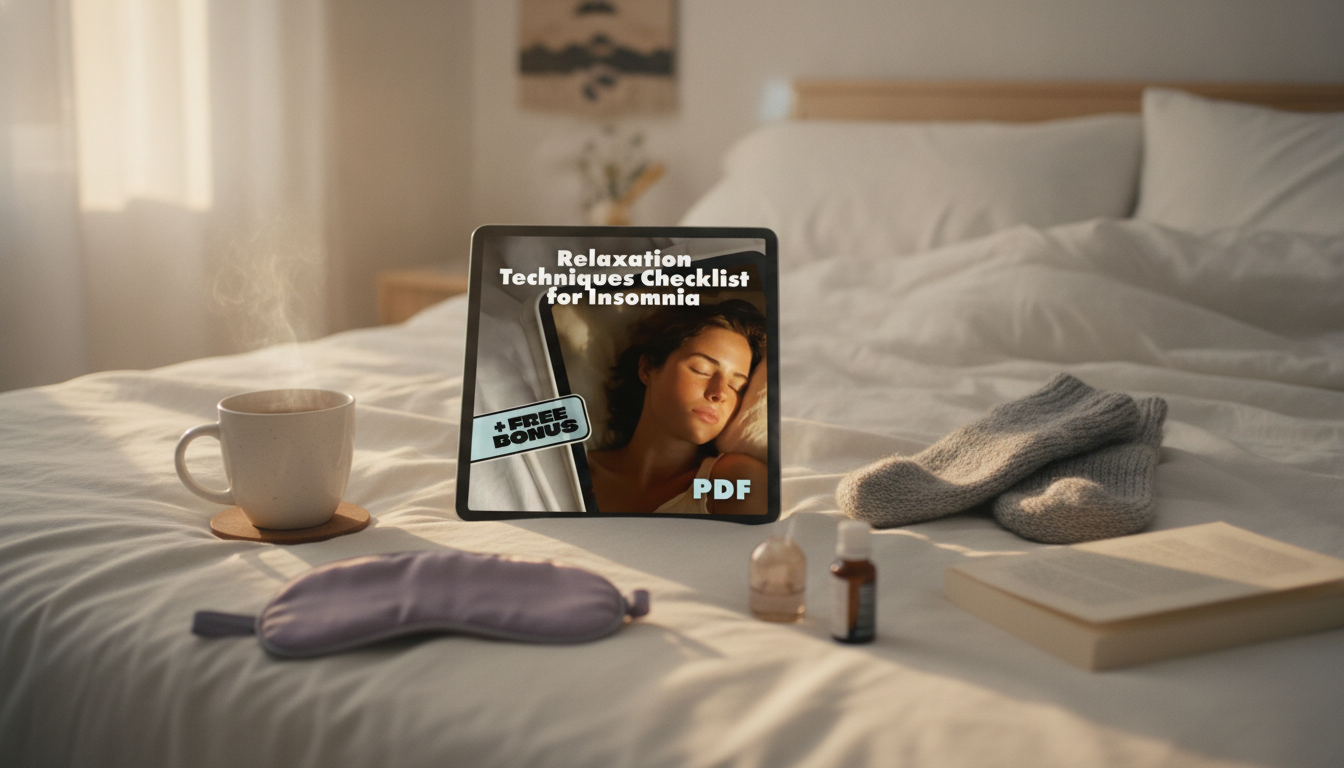
Relaxation Techniques Checklist for Insomnia: A Calming Bedtime Routine for Restful Nights
Falling asleep can feel harder when the mind is busy and the body stays on alert. A simple, repeatable wind-down routine can lower mental “noise,” ease physical tension, and make bedtime feel predictable again. The goal isn’t to force sleep—it’s to create conditions that make it easier for sleep to show up naturally. Below are practical relaxation methods and a way to turn them into a nightly checklist you can actually stick with (and adjust without guesswork).
Why a checklist can make bedtime easier
When insomnia hits, even small choices can feel oddly activating: Should you stretch? Breathe? Journal? A checklist reduces the need to decide in the moment and helps the brain recognize a familiar “off-ramp” from the day.
- Reduces decision fatigue: choosing “what to do next” keeps the brain engaged; a checklist provides a clear sequence.
- Builds consistency: repeating the same cues (dim lights, breathing, muscle release) teaches the body that sleep is approaching.
- Creates a stopping point: a defined routine helps limit late-night scrolling, work, or problem-solving spirals.
- Makes progress visible: checking off steps highlights what helps and what can be changed without guessing.
What’s included in a relaxation techniques checklist (digital download)
If you prefer structure, a ready-made guide can make the routine easier to follow night after night—especially on tired evenings when motivation is low.
- A structured bedtime routine guide that can be used on a phone/tablet or printed for the nightstand.
- Step-by-step relaxation options (breathing, body scan, progressive muscle relaxation, calming imagery) so the routine stays flexible.
- Space to note bedtime, wake time, and quick observations (for example: caffeine late day, stress level, nap length).
- A simple weekly reset: keep what works, swap what doesn’t, and avoid changing too many variables at once.
- Best for: people who struggle to fall asleep, people who wake up wired at night, and anyone who wants a calmer wind-down without complicated tools.
If that sounds useful, you can find the Relaxation Techniques Checklist for Insomnia (digital download) here.
Core relaxation methods to try (choose 2–3 per night)
Rotating between a few reliable techniques can prevent your routine from feeling like a rigid script. Pick what fits the night you’re having, then repeat those choices for several nights before swapping again.
- Slow breathing: inhale through the nose, exhale longer than the inhale (for example, 4 seconds in / 6 seconds out) for 3–5 minutes to encourage downshifting.
- Progressive muscle relaxation: tense then release muscle groups from feet to face; focus on the contrast between tightness and softness.
- Body scan: move attention slowly from toes to head, labeling sensations without fixing them; if attention wanders, return gently.
- Calming imagery: picture a familiar peaceful place with sensory detail (temperature, sounds, texture) to reduce rumination.
- Worry “parking lot”: write a short list of concerns and the next small action for tomorrow, then close the notebook to signal completion.
- Gentle stretching: slow, non-straining movements (neck, shoulders, hips) paired with steady breathing; avoid vigorous yoga or anything that feels energizing.
A 20-minute bedtime routine menu (mix and match)
Keep the routine short enough to repeat nightly; consistency matters more than length. Aim for lower light and lower stimulation during the final 30–60 minutes before bed (especially bright screens). On rough nights, use a “minimum routine” (5–8 minutes) so bedtime doesn’t turn into a performance.
| Time | Step | How to do it | Goal |
|---|---|---|---|
| 0:00–2:00 | Environment reset | Dim lights, cool the room slightly, set phone to Do Not Disturb | Reduce sensory stimulation |
| 2:00–7:00 | Slow breathing | Inhale 4, exhale 6 (or any comfortable longer exhale) | Lower arousal and heart rate |
| 7:00–14:00 | Muscle release | Progressive muscle relaxation from feet upward | Ease physical tension |
| 14:00–18:00 | Body scan or imagery | Scan sensations or imagine a calming place | Shift attention away from rumination |
| 18:00–20:00 | Closure cue | Write 1–3 “tomorrow” notes, then lights out | Signal the day is done |
How to personalize the checklist without overcomplicating it
Personalization works best when it’s slow and deliberate. Changing everything at once can make sleep feel like an experiment you have to “pass.”
Common pitfalls that make insomnia feel worse
Extra support and helpful resources
For additional reading from trusted organizations, see the American Academy of Sleep Medicine (AASM) insomnia fact sheet, the National Heart, Lung, and Blood Institute overview of insomnia, and the CDC’s sleep and sleep disorders resources.
Related digital guides to reduce nighttime stress spirals
- How to Escape a Car Loan You Can’t Afford – Step-by-Step Ebook Guide (for financial stress that keeps looping at night)
- 10 Loving Ways to Comfort Your Child When They Miss a Parent (for caregiving stress and bedtime emotional load)
FAQ
How long should a bedtime relaxation routine take?
Aim for 5–20 minutes, depending on your energy and schedule. Consistency matters more than length, so keep a “minimum routine” (like 3 minutes of breathing plus a quick body scan) for nights when you’re exhausted or frustrated.
What if relaxation techniques make thoughts feel louder at first?
That can happen when things finally get quiet and your brain notices what it’s been skipping over. Start with shorter sessions, try guided audio, and do a quick “worry parking lot” note before relaxing; when thoughts pop up, gently redirect without trying to force silence.
Can a checklist help with middle-of-the-night awakenings?
Yes—use a simplified overnight version: a few minutes of slow breathing or a body scan, with lights low and screens off. If you’re awake longer than about 20 minutes, shift to a quiet, non-stimulating activity until sleepy again, without clock-watching.
















Leave a comment