End Homework Battles: Calm Routine + Printable Checklist
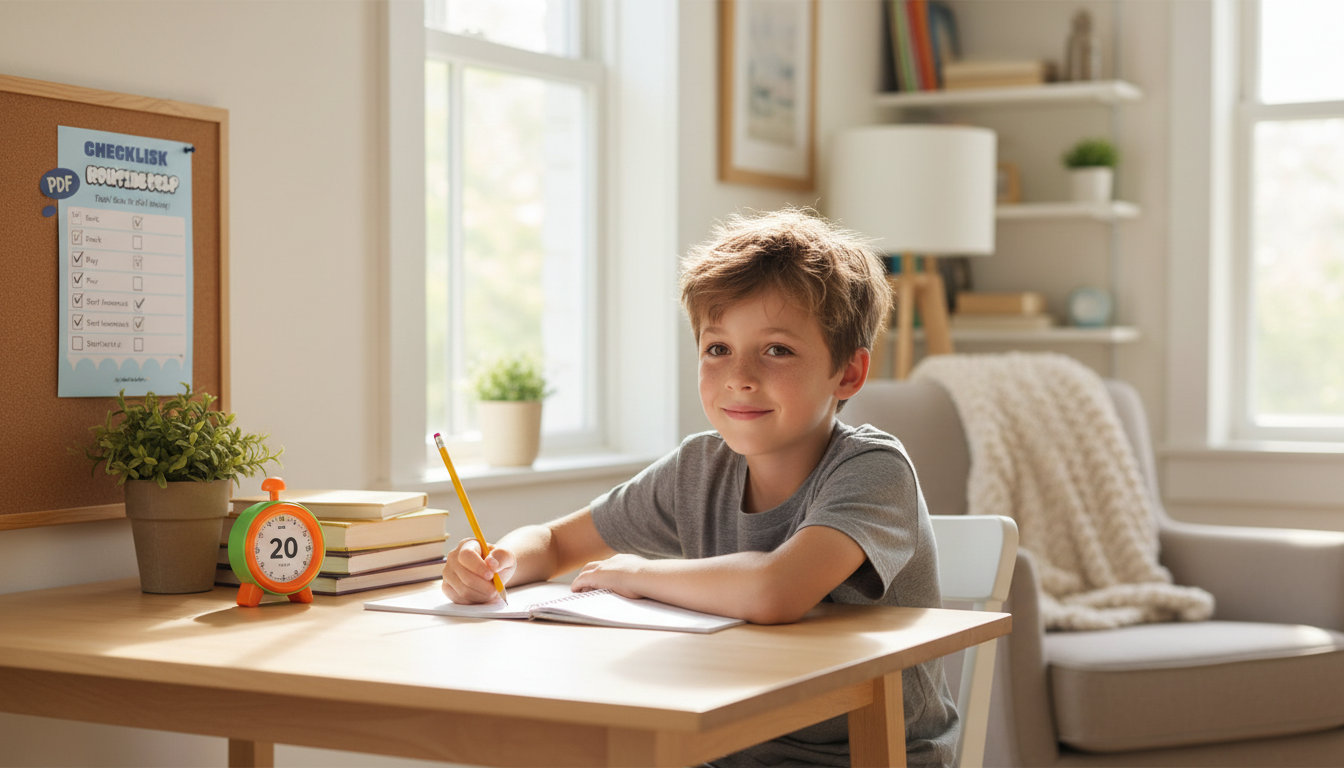
Homework time can slide from “quick check-in” to a full-blown standoff when kids are tired, hungry, or unsure where to start. A simple, repeatable routine reduces decision fatigue, sets clear expectations, and helps children move from school mode to home mode without battles. The goal is not perfection—it’s a calmer path from backpacks to bedtime with fewer reminders and more independence.
Why homework spirals into conflict (and what actually helps)
Most homework battles aren’t really about the math worksheet. They’re about capacity, clarity, and control—especially at the end of a long school day.
- After-school fatigue: attention and self-control are lower after a full day of school, so small frustrations feel bigger.
- Unclear starting point: “Do your homework” is vague; kids often need a first step they can see and finish.
- Competing needs: hunger, overstimulation, and the need to decompress can look like “refusal” but usually signal unmet needs.
- Adult-child power struggles: repeated reminders and negotiations can unintentionally reinforce avoidance.
- What helps most: predictable sequences, visual prompts, short work blocks, and a consistent wrap-up that closes the loop.
For a research-backed baseline on building strong study habits, the American Academy of Pediatrics offers practical guidance for families at HealthyChildren.org.
Set up the environment for calm afternoons
A calm routine is easier when the space does some of the “parenting” for you. The goal is to reduce friction: fewer missing items, fewer interruptions, and fewer “Wait, where is…?” moments.
- Create one homework landing zone: a single basket/bin for folders, library books, and forms to reduce missing-item stress.
- Choose a consistent workspace: good lighting, minimal clutter, and a comfortable chair; keep supplies within reach (pencils, eraser, charger).
- Plan a decompression buffer: 15–30 minutes after school for snack, movement, or quiet time before asking for tasks.
- Reduce distractions intentionally: silence nonessential notifications and keep entertainment screens out of the workspace during work blocks.
- Use a visible timer: time feels abstract for kids; a timer makes the work period feel containable.
Quick setup checklist for the homework zone
| Area | What to prepare | Why it matters |
|---|---|---|
| Landing zone | Bin for backpack/folder + spot for permission slips | Fewer last-minute searches and missed forms |
| Supplies | Pencils, paper, calculator, headphones, charger | Prevents repeated interruptions |
| Workspace | Clear surface, good light, comfortable seat | Supports focus and reduces irritability |
| Time cues | Timer + small notepad for “ask later” questions | Creates boundaries and keeps momentum |
| Break plan | Water + planned movement break | Avoids burnout and power struggles |
A step-by-step homework routine that ends the negotiating
This routine is designed to feel the same every day. When kids can predict what happens next, they spend less energy resisting and more energy starting.
Step 1: Reset first (5–10 minutes)
Snack, water, and a quick transition activity (walk the dog, stretch, quiet play, or a few minutes outside) lowers stress before academics.
Step 2: Review together (2–3 minutes)
Scan the planner/classroom app together. Identify what’s due, what’s most time-sensitive, and what materials are needed. The adult’s job is “navigator,” not “enforcer.”
Step 3: Pick the easy win first
Start with a short, doable task to build momentum. Finishing something quickly creates the feeling of progress that makes the next task less intimidating.
Step 4: Work in short blocks
Use 10–20 minute work blocks (younger kids shorter, older kids longer), followed by a 2–5 minute break. The break is planned, not negotiated in the moment.
Step 5: Use one script for support
Try: “Show the first problem you understand; then pick one you want help with.” This keeps kids engaged and prevents adults from taking over.
Step 6: Pack-up routine
Step 7: Close the loop
A printable checklist to make the routine automatic
If a ready-to-use visual is helpful, consider Homework Without the Nightly Drama – Child Homework Routine Help Checklist (Printable Digital Download) for a simple, repeatable sequence kids can follow with less prompting.
Help that fits different ages and learning needs
When stress is a major driver of shutdowns, the American Psychological Association’s tips for families can help you spot pressure early and respond supportively: Managing Stress for Children and Teens.
Common stuck points (and calm responses that work)
For more parent-friendly strategies, the CDC also shares simple ways to support homework routines at Helping Your Child with Homework.
How to use the checklist for a week and make it stick
Support for the emotional side of after-school stress
Some afternoons, homework resistance is really a sign of separation stress, a hard school day, or big feelings that need a quick reset before tasks. If your child often melts down after transitions, 10 Loving Ways to Comfort Your Child When They Miss a Parent (Printable Digital Download) can pair well with a homework routine by giving you a calm, consistent plan for reconnecting first.
FAQ
How long should after-school homework time be?
Many families do best with short, focused blocks: about 10–20 minutes at a time for younger kids and 20–30 minutes for older kids, with quick breaks. If homework regularly runs far past a reasonable window for your child’s age, check in with the teacher about expectations and supports.
What if a child refuses to start homework?
Make the first step predictable and small: reset with snack/water, offer two simple choices (where to sit or which “easy win” to start), and set a short timer to begin. Skip long debates and return to the checklist sequence so the routine—not negotiation—drives the next move.
Should homework happen before or after playtime?
A brief decompression break first often improves cooperation, but it helps to do homework before high-reward screens. If outdoor play boosts focus for your child, schedule a short play break first—then keep that order consistent so expectations stay clear.















Leave a comment