Color Hunt: 60-Second Visual Grounding for Focus
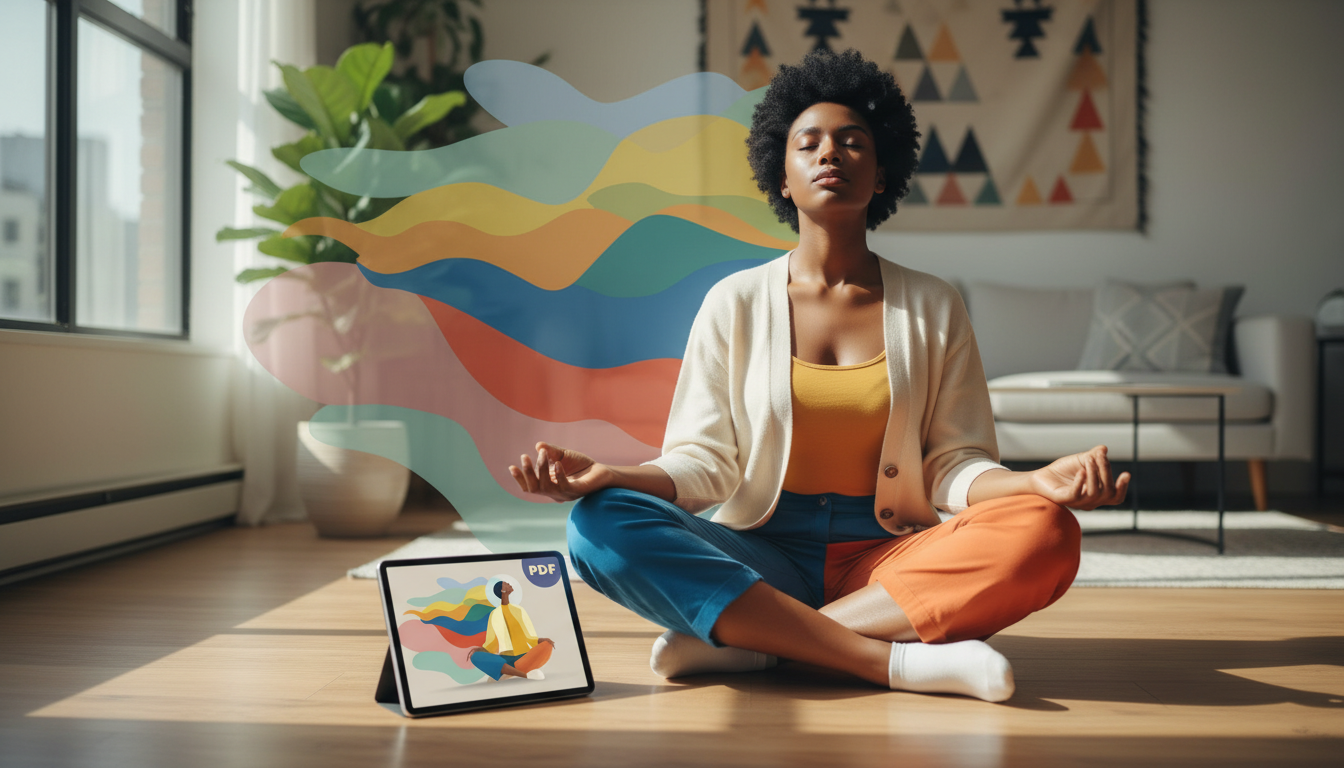
Color Hunt: Sharpening Focus Through Visual Grounding
Color Hunt is a simple visual grounding practice designed for busy minds that want steadier attention without adding another complicated routine. By intentionally spotting and naming colors in the environment, the brain gets a clear, low-effort target—helping reduce mental noise, support calmer focus, and make it easier to return to the task at hand.
Why visual grounding helps when attention feels scattered
Attention often drifts when the mind is overloaded by notifications, multitasking, stress, or fatigue. When there’s too much to track, the brain tends to “ping” between inputs—emails, worries, half-finished tasks—without fully landing anywhere.
Visual grounding uses immediate sensory input as an anchor, giving attention something concrete to follow in real time. Color is especially effective because it’s everywhere, instantly recognizable, and easy to label without overthinking. Instead of forcing concentration, Color Hunt gently redirects it.
This matters because attention is a limited mental resource. Even the American Psychological Association describes attention as the process of focusing awareness on some phenomena while excluding others, which means your environment can either scatter or support that focus (APA Dictionary of Psychology: Attention).
Short grounding resets can also reduce spiraling thoughts and support smoother transitions back to work or study. They’re especially useful when switching contexts—like moving from a meeting into deep work—because the mind gets a brief “landing pad” before the next demand.
What “Color Hunt” is and what it isn’t
Color Hunt is a quick, repeatable attention drill: pick a color, scan for it, name what you see, then switch colors. It’s a mindfulness technique in the simplest sense—notice what’s present, then return—without requiring silence, candles, or a long sit.
It also emphasizes noticing rather than judging or analyzing. The goal isn’t to interpret why you chose blue or what a yellow object “means.” It’s to practice a clean, low-friction loop: notice → name → return.
Color Hunt is not a replacement for medical care, therapy, or diagnosis for attention-related conditions. It’s a supportive skill you can use alongside professional guidance if needed. For broader stress-care strategies, resources like NIMH: Coping with Stress can be a helpful reference point.
It’s also not a productivity “hack” that forces output. The benefit is steadier presence—so the next step (writing the email, solving the problem, reading the chapter) takes less effort to begin.
A simple Color Hunt routine for work, study, and daily life
Keeping Color Hunt small is what makes it sustainable. Set a tiny time boundary (30–120 seconds) so it stays light and repeatable, even on packed days.
Step-by-step
- Choose one color to start (blue, green, red).
- Scan the room (or a safe outdoor area) and identify 5–10 items with that color.
- Name the object plus the color out loud or silently (example: “blue mug,” “blue folder”).
- Switch to a second color and repeat.
- End by returning awareness to the next task with one deep breath.
Color Hunt works best during transitions: before opening a laptop, after a meeting, when switching between tabs, or right after a distracting notification. It’s a “micro-bridge” between scattered attention and single-task focus.
Quick-start Color Hunt options
| Situation | Time | Color target | What to notice | Next step |
|---|---|---|---|---|
| Before deep work | 60 seconds | Blue | 5 objects + 1 shade variation | Open the task and start a 10–25 minute focus block |
| After a stressful message | 90 seconds | Green | 10 objects + textures | Write one calm, clear next action |
| Mid-afternoon slump | 45 seconds | Yellow | 3 objects + light reflections | Stand, drink water, resume with one priority |
| End of day wind-down | 2 minutes | Warm colors | Objects that feel comforting | Close loops: list 3 tasks for tomorrow |
Making it stick: small tweaks that improve results
Consistency comes from reducing friction. Tie Color Hunt to a cue that already happens—pouring coffee, logging in, closing a call, or waiting for a document to load. The smaller the “start-up cost,” the more often you’ll actually do it.
Mindfulness meets productivity: where Color Hunt fits
For a broader view of mindfulness-based approaches used in everyday life, the UMass Chan Center for Mindfulness MBSR overview offers helpful context on how brief, present-moment practices can support well-being.
Who this guide is best for
Digital guide details and what’s included
If you want a clear structure you can reuse without thinking, the Color Hunt: Sharpening Focus Through Visual Grounding (digital guide) is designed for quick reference. It’s an easy-to-follow eBook format with practical prompts, short routines, and focus-forward variations for different settings (home, office, commuting, breaks).
For families who want simple, supportive tools in other areas of daily life, 10 Loving Ways to Comfort Your Child When They Miss a Parent (printable checklist) is another quick-reference resource that focuses on calm, actionable steps during emotional transitions.
FAQ
How long should a Color Hunt session be?
Most sessions work best at 30–120 seconds, since the goal is a quick reset you’ll actually repeat. Consistency matters more than duration; extend to 3–5 minutes only if it stays calming and doesn’t feel compulsive.
Can Color Hunt help with stress or anxious thoughts during the day?
It can help interrupt a spiral by shifting attention to present sensory input—something the mind can reliably track right now. It’s a supportive tool (for example, after a stressful email or before a call), but it isn’t a substitute for professional care when stress or anxiety feels unmanageable.
Is this practice suitable for kids or teens?
Yes—keep the rules simple and the rounds short, like “find 5 red things.” Make it playful, and prioritize safety (no scanning while crossing streets or doing anything that requires full attention).











Leave a comment