Remove Fabric Pilling Fast: Bye-Bye Bobbles Checklist
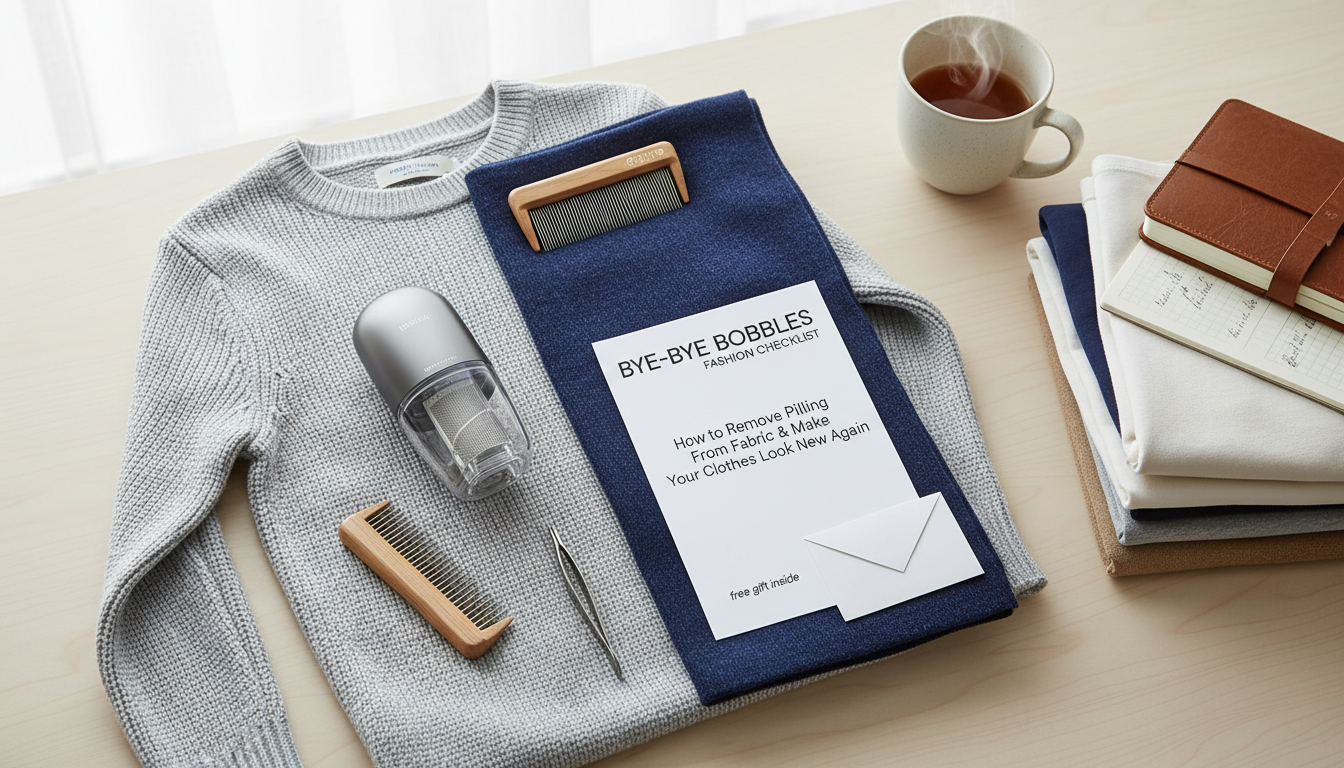
The “Bye-Bye Bobbles” Fashion Checklist: a smoother wardrobe in minutes
Pilling can make even high-quality knits, tees, and loungewear look tired fast—especially in high-friction spots like underarms, inner thighs, and where a crossbody bag rubs. The good news: most pills are removable, and a simple routine can keep them from coming back as quickly. The The “Bye-Bye Bobbles” Fashion Checklist (digital download) is designed as a repeatable, fabric-first workflow you can save to your phone or print and keep near your laundry supplies. For more guidance, see How to Remove Pilling From Clothes – Vogue.
What pilling is and why it happens
Pilling happens when loose fibers migrate to the fabric surface and tangle into tiny balls due to friction. That friction can come from everyday movement, backpacks and handbags, seatbelts, upholstery, and—most commonly—washing and drying. For further reading, see Fabric Care Tips: Removing Pilling Keeps Old Clothes New | Blueland.
Some items pill more because of how they’re made: staple length, yarn twist, knit structure, and fiber blends all play a role. Blends that combine synthetics (which are strong) with natural fibers (which shed) often pill more visibly because the synthetic component helps pills “hang on” longer.
Importantly, pilling isn’t always a sign of low quality. Many soft, brushed, and cozy knits pill because they have more surface fibers available to tangle. Common hotspots include inner thighs, underarms, cuffs, collar edges, and side seams where a bag or coat rubs.
What’s inside the “Bye-Bye Bobbles” checklist (digital download)
The checklist is built for quick touch-ups without overworking fabric. It walks through:
- A step-by-step pilling removal workflow for faster wardrobe refreshes.
- Tool guidance (fabric shaver vs. sweater comb vs. gentler hand methods).
- Fabric-first decision points to reduce snags, thinning, and shine marks.
- Prevention steps for laundry day and daily wear so pills return more slowly.
- A printable format that fits easily into a closet binder or laundry station.
If you like having repeatable routines (rather than guessing each time), The “Bye-Bye Bobbles” Fashion Checklist – How to Remove Pilling From Fabric & Make Your Clothes Look New Again | Digital Download keeps the process consistent—especially when you’re prepping outfits for work, travel, or an event.
Tools that work (and how to choose the safest option)
Depilling is all about matching the tool to the fabric, then using a light touch. Here’s what typically works best:
- Fabric shaver: Great for larger areas of pilling on sturdier knits and jerseys. If possible, choose one with an adjustable height setting.
- Sweater comb or depiller stone: Useful for tighter knits and targeted control. Use minimal pressure and short strokes.
- Lint roller and garment brush: Ideal for removing fuzz and loose fibers after depilling so the finish looks clean.
- Sharp scissors (spot use only): Best for one or two stubborn pills; avoid cutting into the knit structure.
- What to avoid: Aggressive razors on delicate fabrics, heavy pressure on thin knits, and depilling directly over seams or embellishments without extra caution.
Quick guide: fabric type vs. depilling method
| Fabric / item | Best approach | Extra caution |
|---|---|---|
| Wool sweaters (fine knit) | Sweater comb or low-setting fabric shaver | Work flat; avoid seams, ribs, and raised stitching |
| Cotton tees & jersey | Fabric shaver (low/medium) + lint roll | Don’t press hard—thin spots can form quickly |
| Acrylic/poly blends | Fabric shaver (medium) in light passes | Pills can return fast; focus on prevention steps |
| Athleisure/leggings | Depill stone or low-setting shaver | Avoid logos, bonded seams, and stretched areas |
| Delicate cashmere | Gentle combing and minimal shaving | Test a hidden spot first; fewer passes is safer |
How to remove pills without damaging clothes
A careful setup prevents most mishaps. Start by preparing the garment: wash or spot-clean if needed, dry completely, and lay it flat on a hard, smooth surface (a table is safer than your lap).
Next, add light tension. Gently stretch the area so pills sit slightly proud of the surface—this helps the tool lift pills without grabbing the fabric itself.
Work in short, light passes. Let the tool do the work and stop often to check your progress. If you notice thinning, shine, or excessive fuzzing, pause and switch to a gentler method or stop altogether.
Be extra careful around cuffs, collars, ribbing, seams, and pocket edges. These areas are more likely to snag or show wear.
Finish by removing loose lint with a lint roller or garment brush. If the fabric allows, a brief, light steam can help relax fibers and improve the overall look. For additional technique guidance, Good Housekeeping’s overview is a helpful reference: How to Remove Pilling From Clothes.
Laundry habits that reduce pilling over time
Daily-wear prevention: keep “bobbles” from coming back fast
When to stop depilling (and when it’s time to retire or repair)
Digital download details and who it’s for
More digital downloads you might like
- 10 Loving Ways to Comfort Your Child When They Miss a Parent | Gentle Parenting Checklist | Printable Digital Download
- AI Insights for a Healthier Cat: Ultimate eBook Guide for Cat Health Monitoring with AI Tools and Techniques
FAQ
Does removing pills damage fabric?
It can if you use too much pressure or the wrong tool for a delicate knit. Use light passes, test on a hidden spot first, and stop immediately if you notice thinning, shine, or excessive fuzzing.
Why do my clothes pill again so quickly?
Fast repeat pilling is usually caused by fiber blends and ongoing friction from wear and washing. Turning items inside out, using gentler cycles, and reducing abrasion (separating rough laundry, avoiding overloads) helps slow it down.
What’s the safest way to depill cashmere or fine wool?
Use minimal, gentle combing or a very low-setting fabric shaver, working flat with light tension and avoiding seams and ribs. Fewer passes are safer, and spot testing first helps prevent accidental thinning.
















Leave a comment