Measure Your Dog for a Harness: Printable Fit Checklist
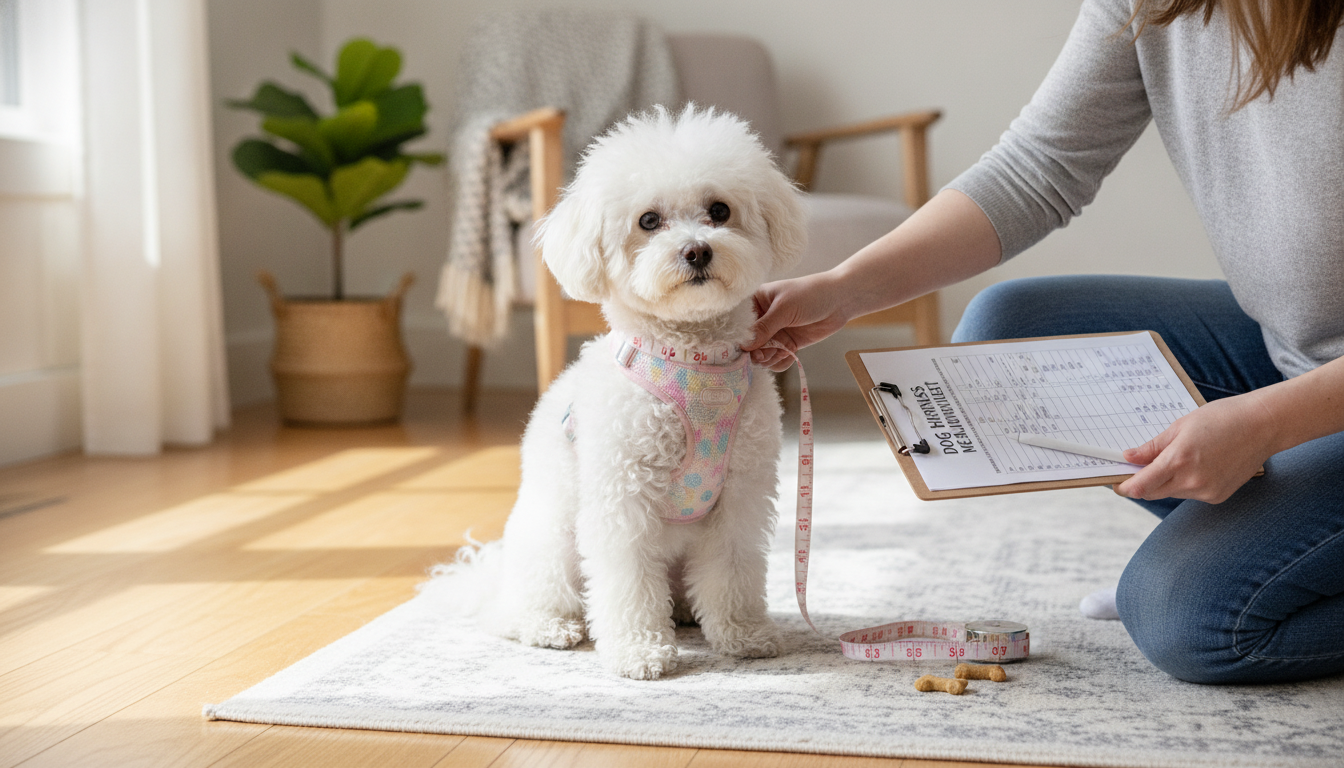
Dog Harness Measurement Checklist: A Printable Guide for Getting the Right Fit
A harness that fits well improves comfort, safety, and control—especially for puppies, deep-chested breeds, and dogs that pull. The simplest way to avoid rubbing, shifting, and “escape artist” moments is to measure first, then compare your dog’s numbers to the brand’s sizing chart (not the breed guess on the label). If you want to keep everything in one place, the Dog Harness Measurement Checklist printable guide (instant download) makes it easy to record inches and centimeters and re-check sizing as your dog grows or changes weight. For more guidance, see How To Size a Dog Harness – Kiwi Sizing.
What You’ll Need Before Measuring
- Soft measuring tape (tailor’s tape); if unavailable, use a string plus a ruler
- Treats to keep posture neutral and still
- A flat collar (optional) to help the dog stay in place
- Pen/notes app to record measurements in inches and centimeters
- A helper for wiggly dogs or puppies
Set Up for Accurate Measurements
- Measure when the dog is standing naturally on all fours—no sitting, stretching, or twisting
- Keep the tape snug but not tight; a “two-finger” comfort rule helps prevent over-tightening
- Brush aside thick fur and measure close to the body; note “fluffy coat” if your dog has heavy fur
- Take each measurement twice and use the larger number if results differ
If you’d like a visual refresher on general pet measuring, the American Kennel Club offers a helpful overview here: American Kennel Club: How to Measure Your Dog. For further reading, see Dog Harness Size Calculator.
Key Measurements Most Harnesses Use (Step-by-Step)
1) Girth (chest circumference)
Wrap the tape around the widest part of the ribcage, typically just behind the front legs. This number is the main driver for most harness sizing because it determines how the harness sits around the torso and how stable it is when your dog pulls.
2) Neck circumference (for harnesses with a neck opening)
Measure where a collar sits at the base of the neck—lower than many people expect. Avoid measuring high up near the head, where the neck is smaller and where a harness usually doesn’t rest. If a harness has a fixed neck opening (non-adjustable), this measurement can be the tie-breaker.
3) Chest length / sternum-to-girth (often for front-clip and Y-shaped designs)
Measure from the breastbone area between the front legs to the point where the girth tape would sit behind the front legs. This helps prevent a front strap from landing too far forward (rubbing armpits) or too far back (reducing control and stability).
4) Back length (only if a brand requests it)
Some styles ask for a top-line measurement from the withers (the bony ridge between the shoulder blades) to the base of the tail. Many harnesses don’t use this number at all, so only take it if the brand’s chart calls for it.
5) Weight and breed notes (sizing tie-breakers)
Record current weight and a quick body-type note (slim, average, broad). If your dog is in between sizes, these details help you choose whether to size up for comfort and adjustability or size down for stability.
For tracking weight changes that can affect fit over time, VCA’s body condition scoring guide is a useful reference: VCA Animal Hospitals: Body Condition Scoring.
Measurement Reference Table (Fill-In and Keep With Your Pet Records)
Record both inches and centimeters to match any sizing chart. Write the date measured (especially for puppies), and add notes like “between sizes” or “deep chest” so you remember why you chose a specific size.
| Measurement | How to Measure | Your Dog (in) | Your Dog (cm) | Notes |
|---|---|---|---|---|
| Girth (widest chest) | Around ribcage just behind front legs | |||
| Neck circumference | Around base of neck where collar rests | |||
| Chest length (sternum to girth) | From breastbone between legs to girth line | |||
| Back length (if required) | Withers to base of tail (only if brand asks) | |||
| Weight | Current weight from scale or recent vet visit |
Common Measuring Mistakes That Lead to a Poor Fit
- Measuring the neck too high (near the head) instead of at the base where a collar sits
- Measuring girth too close to the armpits; harness straps can rub if sizing is based on the wrong position
- Leaving slack in the tape or pulling too tight; either error can shift you an entire size
- Relying on breed-only estimates; dogs within the same breed vary widely in chest depth and width
- Ignoring coat thickness and seasonal changes (winter coat vs. summer shed)
How to Choose the Correct Size When Between Two Sizes
Quick Fit Check After the Harness Arrives
Printable Checklist Option for Faster Measuring
- The Dog Harness Measurement Checklist (Printable Pet Guide)
- AI Insights for a Healthier Cat (eBook Guide) (helpful if you track multiple pet health and care details alongside sizing records)
FAQ
What is the most important measurement for a dog harness?
Girth (the widest chest circumference) is typically the primary sizing measurement because it determines overall stability and security. If a harness has a fixed neck opening or a structured front panel, neck circumference and chest length can also be deciding factors.
How tight should a dog harness be?
A properly fitted harness should be snug but comfortable: you should be able to slide two fingers under each strap. Too tight can cause rubbing or restricted shoulder movement, while too loose can shift, twist, or increase the risk of backing out.
Should measurements be taken over thick fur?
Measure as close to the body as possible by brushing the coat aside, then note that your dog has a thick or fluffy coat. Leave enough adjustment room for comfort without sizing up so much that the harness becomes unstable and slides around.















Leave a comment