Harmony in Motion: Simple Mind-Body Habits That Stick
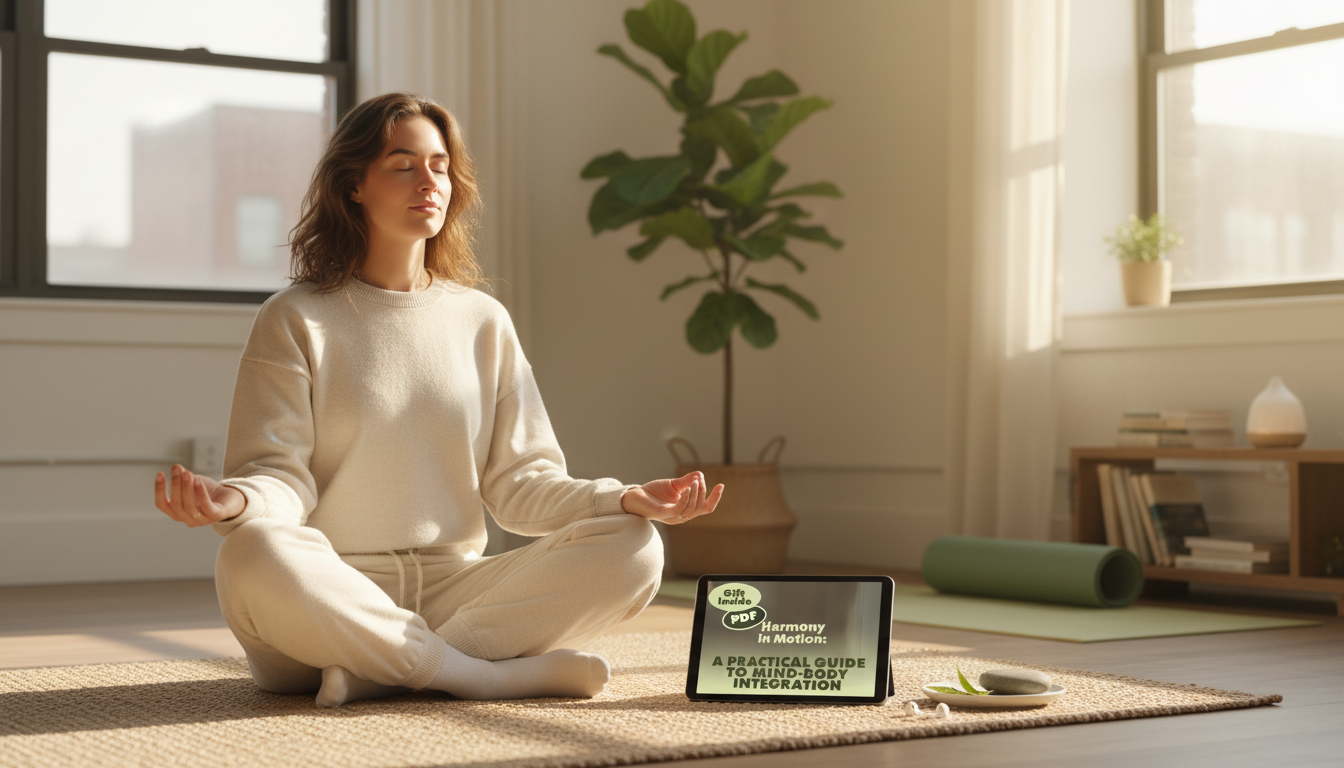
Harmony in Motion: A Practical Guide to Mind-Body Integration for Daily Life
Mind-body integration becomes easier when it’s treated like a set of repeatable habits rather than a vague goal. The Harmony in Motion: A Practical Guide to Mind-Body Integration (digital download) is built around small, trackable practices—mindfulness, meditation, movement, and AI-assisted self-care ideas—so routines feel doable on busy days and supportive on hard days. Instead of waiting for the “perfect” schedule, you’ll have a simple structure you can repeat, adjust, and return to.
Mindfulness and meditation are widely studied for stress support and overall well-being; for a research-backed overview, see the American Psychological Association’s summary on mindfulness meditation and stress, plus the NCCIH’s review of effectiveness and safety. Pairing those practices with regular movement also aligns with the Physical Activity Guidelines for Americans, which emphasize that even small bouts of activity add up.
What mind-body integration looks like in real life
“Integrated” doesn’t mean calm 24/7. It tends to show up as a steadier baseline and better recovery when life is loud, fast, or uncertain.
- A steady baseline: fewer spikes in stress reactivity and quicker recovery after difficult moments.
- Body awareness: noticing early signals (tight jaw, shallow breath, tension) before they snowball.
- Emotional range: feelings are acknowledged without instantly needing to fix or suppress them.
- Behavioral consistency: small actions (hydration, stretches, check-ins) reinforce mental clarity.
- A feedback loop: reflection leads to adjustments instead of self-criticism.
Over time, the goal is less “never stressed” and more “able to respond on purpose.” That’s the core skill the guide helps you build, one checkmark at a time.
What’s inside the Harmony in Motion digital download
This digital guide is designed to reduce decision fatigue. You don’t have to figure out what to do next—each step is laid out in a way that supports consistency without demanding long sessions.
- Guided structure for building a simple routine: grounding, mindful attention, and supportive movement.
- A wellness checklist format designed for quick daily completion and weekly review.
- Meditation-friendly prompts that keep the next step clear.
- AI-enhanced self-care ideas: suggested reflections, journaling directions, and pattern-spotting questions.
- Digital-first convenience: use on your phone/tablet or print only the pages you want.
Key elements and how they help
| Element | How it supports mind-body integration | Best time to use |
|---|---|---|
| Daily wellness checklist | Turns self-care into small measurable steps; improves consistency | Morning or evening |
| Mindfulness prompts | Trains attention to sensations, thoughts, and emotions without judgment | Midday reset or pre-sleep |
| Meditation framework | Builds breath-awareness and emotional regulation through repetition | 5–15 minutes anytime |
| AI-assisted reflection questions | Helps identify patterns (stress triggers, energy dips) and create gentle next steps | Weekly review |
| Practical integration tips | Bridges “practice time” and real-world moments (work, parenting, commuting) | During transitions |
A flexible routine: the “3-2-1” integration reset
When you need something fast, repeatable, and calming without being complicated, use this reset. It’s intentionally short so it’s easier to do consistently.
- 3 minutes: body scan (head to toe) to locate tension and soften one area.
- 2 minutes: breath anchor (counted breaths or box breathing) to steady the nervous system.
- 1 minute: intention statement (one sentence) tied to a specific next action.
- Use it during transitions: before meetings, after scrolling, before meals, or after commuting.
- Track completion with a simple checkmark to reinforce consistency over intensity.
An intention that works well is specific and kind: “For the next 20 minutes, I’ll work steadily and relax my shoulders when I notice them rising.”
Mindfulness and meditation: small adjustments that make practice stick
The most sustainable routine is the one you’ll actually return to. Small tweaks can make mindfulness feel less like a performance and more like a skill you train.
- Lower the entry barrier: start with one minute and stop while it still feels manageable.
- Choose an anchor: breath, sounds, feet on the floor, or hands resting on the abdomen.
- Name the experience: silently label “thinking,” “worrying,” “planning,” then return to the anchor.
- Use micro-practices: three mindful breaths before opening email or entering a room.
- Build a closing ritual: one stretch, sip of water, or a quick note about what you noticed.
That last step matters: it teaches your brain to associate the practice with completion and reward, which makes it easier to repeat tomorrow.
AI-enhanced self-care without losing the human part
If you’re also curious about applying AI to day-to-day wellness in other parts of life, AI Insights for a Healthier Cat: Ultimate eBook Guide offers a structured way to notice patterns and stay organized—especially helpful for pet parents who already track routines and symptoms.
Making the checklist work on difficult weeks
Who this guide fits best
For a lightweight, structured starting point that stays flexible, explore Harmony in Motion: A Practical Guide to Mind-Body Integration (digital download) and build a routine that fits real life—meetings, commutes, parenting, and all.
FAQ
Is this guide suitable for beginners to mindfulness and meditation?
Yes. It’s designed to be beginner-friendly with short practices, clear prompts, and a checklist format, and it works well starting with just 1–5 minutes at a time.
How does the AI-enhanced self-care part work?
AI is used for reflection ideas and structured questions that help you spot patterns (like stress triggers or energy dips) and plan gentle next steps—while you stay fully in control of what you follow. For privacy, keep identifying details out of any third-party tool.
What do I receive after purchase, and how do I use it?
You receive a digital download guide/eBook with a wellness checklist you can use on a phone or tablet, or print selected pages. It’s delivered digitally (not a physical shipment).
















Leave a comment