Breathing Exercises for Anxiety Attacks: Fast Calm
Calm Your Chaos: Breathing Practices for Anxiety Attack Relief
Anxiety spikes can feel sudden and unstoppable, but the breath is one of the fastest ways to send a “safe enough” signal to your nervous system. The goal isn’t to make symptoms vanish on command—it’s to interrupt the spiral and create a little space. These breathing practices are simple, repeatable, and realistic to use on a commute, in a meeting, or at home, so relief feels more accessible in the moment and easier to practice consistently.
What an anxiety attack can feel like (and why it escalates quickly)
An anxiety or panic surge can show up as a racing heart, tight chest, dizziness, tingling, nausea, feeling unreal or “out of body,” and fear of losing control. When the stress response ramps up, breathing often becomes faster and higher in the chest. That shift can lower carbon dioxide levels, which may intensify lightheadedness and sensations like chest tightness—making the fear response feel even more “true.”
Instead of trying to force calm, aim to change what you can control: your breathing pattern and your attention. A helpful mindset is that symptoms can be intense and still be temporary. Focusing on the next breath gives you one workable next step when everything feels too big.
How breathing helps: the quickest lever for the nervous system
Breathing is always happening, which makes it a reliable entry point when thoughts feel chaotic. For many people, longer exhales support a shift toward parasympathetic (“rest-and-digest”) activity, lowering the sense of imminent threat. Counting also gives your mind a small, concrete job—something simple enough to do even when you feel overwhelmed.
The best technique is the one you can do anywhere without strain and repeat for 2–5 minutes. Keep in mind: breathwork works best when it’s gentle. Trying to take huge breaths can increase discomfort or dizziness. Think “quiet and comfortable,” not “deep and dramatic.”
If you want additional background on panic symptoms and treatment, the National Institute of Mental Health (NIMH) is a solid resource, and the American Psychological Association (APA) shares practical relaxation approaches.
A 60-second reset for the first wave of panic
Use this when you feel the initial “rush” and need something fast and doable.
- Posture: Place one hand on your belly and one on your chest. Soften your shoulders and unclench your jaw.
- Inhale (3–4 counts): Breathe in through your nose, comfortably.
- Exhale (5–7 counts): Exhale through your mouth (or nose if that feels better), aiming for a slightly longer exhale than inhale.
- Repeat: Do 6–8 cycles. Keep breaths quiet rather than deep.
- Grounding cue: Press your feet into the floor and name three things physically supporting you (chair, wall, ground).
If you only manage three cycles, that still counts. Small shifts add up.
Three breathing exercises to keep on “quick access”
Different moments call for different tools. Keep two favorites: one for sudden spikes and one for steadier, longer calming.
1) Physiological sigh (fast relief)
Inhale through your nose, then take a second small “top-up” inhale. Exhale slowly and fully. Repeat 2–5 times. This can feel like “letting air out of a balloon”—slow and complete rather than forceful.
2) Box breathing (steadying rhythm)
Inhale 4, hold 4, exhale 4, hold 4. Repeat for 2–4 minutes. If holds increase anxiety, reduce them to 2 counts or remove holds entirely. For a helpful overview, see the Cleveland Clinic’s guide to box breathing.
3) Long-exhale breathing (a gentle 4–7–8 alternative)
Inhale 4, exhale 6–8. Skip the 7-count hold if it feels uncomfortable. Repeat 4 cycles, then continue as needed. This is often a good choice for bedtime or ongoing worry.
Comfort rule: If breathing feels strained, stop and return to normal breathing—then try again with smaller breaths and a slower exhale. “Easy” works better than “intense.”
| Exercise | Best for | How long | Adjustments if sensitive |
|---|---|---|---|
| Physiological sigh | Sudden spike, racing thoughts, tight chest | 20–60 seconds | Keep exhales slow; avoid forceful mouth breathing if it increases dizziness |
| Box breathing | Feeling scattered, need structure and focus | 2–4 minutes | Shorten or remove breath holds; try 3-0-5-0 (inhale 3, exhale 5) |
| Long-exhale breathing (4 in, 6–8 out) | Ongoing worry, bedtime, sustained calming | 3–10 minutes | Breathe quietly; keep inhale easy and prioritize the longer exhale |
Common obstacles and simple fixes
Building a tiny routine that makes “instant relief” more reliable
Using a digital guide to stay consistent when things feel messy
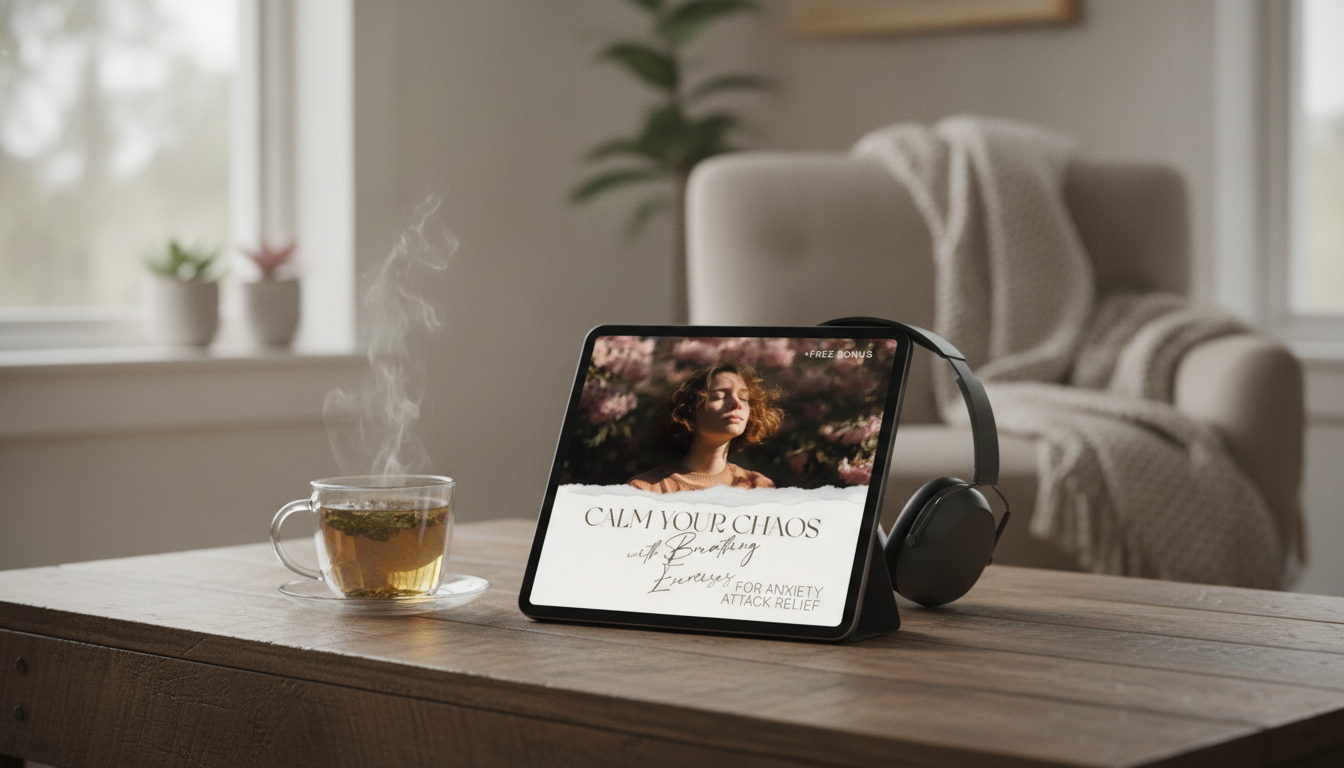
If you want something you can save to your phone as a “pocket protocol,” consider Calm Your Chaos with Breathing Exercises for Anxiety Attack Relief: A Digital Guide for Instant Anxiety Relief (digital download). For stress that shows up in family moments, 10 Loving Ways to Comfort Your Child When They Miss a Parent can support calmer routines and connection. And if finances are a major trigger, How to Escape a Car Loan You Can’t Afford offers a structured plan that may help reduce ongoing stressors at the source.
When to get extra support
FAQ
How fast can breathing exercises reduce anxiety during an attack?
Some people notice a shift within 30–120 seconds, especially with a longer exhale or a few physiological sighs. The aim is often a gradual decrease in intensity rather than an instant stop, so continuing for 3–5 minutes can help stabilize the nervous system.
What if box breathing or breath holds make anxiety worse?
Breath holds can feel activating for some people, especially during panic. Skip holds entirely and use long-exhale breathing (like inhale 3–4, exhale 5–8) with quiet, comfortable breaths.
How often should breathing exercises be practiced for better results?
Practicing 1–3 minutes daily (plus brief “micro-practices” when you remember) helps your body learn the pattern so it’s easier to use during spikes. Repetition also reduces fear of the sensations that can come with anxiety.














Leave a comment